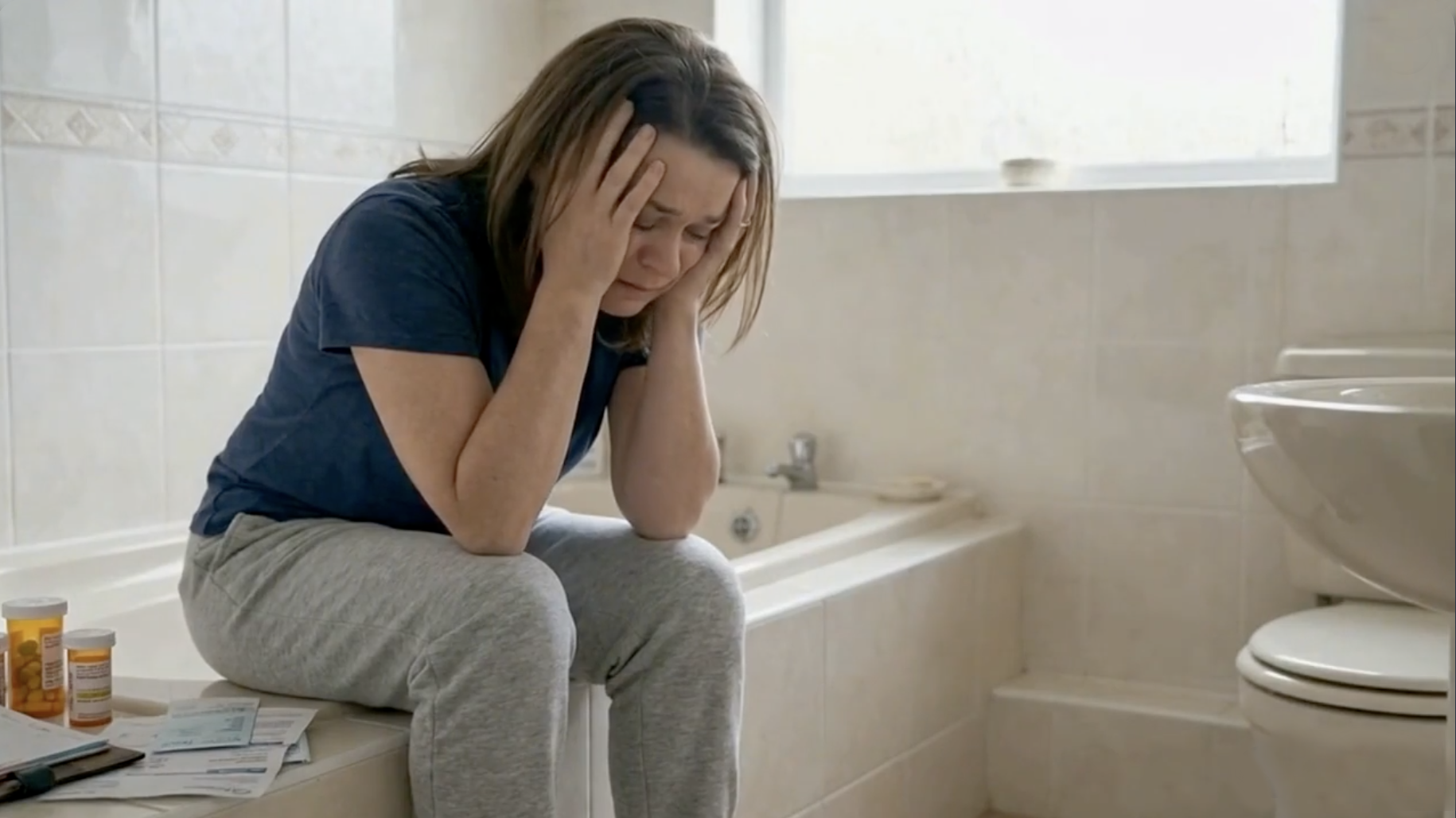
There's a name for people like us. The sandwich generation, usually somewhere between 45 and 65, managing our own lives, our work, our partners, our kids, our homes, our finances, while also trying to help ageing parents through falls, hospitals, medications, fear and recovery. What I'm starting to realise is we don't talk enough about what that actually does to us. Not just emotionally. Physically. In our bodies.
While all of this was happening with my parents, I kept putting myself last, the way a lot of us do. You tell yourself it's just stress, just tiredness, that once things settle down you'll sort yourself out. I had a fluttery heart, tingling in my fingers, I was getting puffed just walking across the street, and honestly, I thought it was just me. Stress. Age. Life.
My family had been nagging me for ages to see a doctor. Eventually I did. And it turned out it wasn't just stress, I ended up needing a heart procedure. That was one of those moments that stops you in your tracks, because suddenly you realise your body has been carrying more than you'd been admitting.
It's been a few months since that procedure now. I'm well into recovery, still paying attention to what my body's doing, but with enough distance to actually see what it taught me. I know I'm lucky, it's sorted now, or heading that way. But it made me see something clearly. So many of us in the middle are holding everything together for everyone else, while quietly falling apart ourselves. Not dramatically. Quietly. In ways that don't always show up until your body forces you to stop.
I know there are people dealing with far worse than I am, my mum's doing okay right now, and I'm grateful for that. But it doesn't change the pattern. The people in the middle are often the ones absorbing the pressure, worrying about parents, kids, partners, work, money, logistics, all of it, until somewhere in there, we disappear. We become the organiser, the driver, the calm one, the reliable one, the person who keeps things moving. And because we can still function, people assume we're okay. Sometimes we assume it too. Until we're not.
That's part of why I'm doing this series. So many of us are going through some version of the same thing, and when you're in the middle of it, it can feel deeply isolating, like everyone else is coping better than you, like maybe you're overreacting, like maybe this is just what life is now. I don't think we're meant to absorb all of this and call it normal, especially not in a country with an ageing population and a system already under pressure. It's going to get harder before it gets easier, more people ageing, more pressure on hospitals and home care, more pressure on the people in the middle who were never trained for any of this but are expected to hold it together anyway.
There's no one-size-fits-all answer here, I can already see that. And that's exactly why these conversations matter. Because if we're not careful, we end up with systems that are all compliance and no care, all process and no humanity. That helps no one, not families, not nurses, not hospitals, not the people ageing inside it.
If you're the one holding it together
I'm not a doctor, and this isn't medical advice, just what I wish I'd taken seriously sooner.
If your body's been trying to tell you something, fluttering, breathlessness, exhaustion that sleep doesn't fix, sudden weight gain that doesn't match anything you're doing differently, and you've been filing it under stress for months, that's worth an actual appointment, not just a mental note. The fact that you're busy caring for someone else is not a reason to deprioritise this, if anything it's the reason not to.
Notice if people close to you keep gently raising the same concern about you. Mine did, for a while, before I listened. If more than one person who loves you has said the same thing more than once, that's worth taking more seriously than your own instinct to wave it off.
You're allowed to be the one who needs care sometimes, not just the one who provides it. That's not a failure of duty to your parents, your kids, or your husband, it's what allows you to keep showing up for any of them at all.
And if you do recognise it in yourself, it's worth asking for help before you're forced to, not after. Ask a sibling, a partner, a friend, anyone, to take something off your plate, even temporarily, even just one thing. It can feel like admitting failure, like you're meant to carry all of it yourself. But if you collapse completely, you don't just stop helping, you become someone who needs to be cared for too, which is the exact opposite of what any of this was meant to protect against. Stepping back isn't giving up. It's making sure there's still a you left to keep showing up.
And underneath all of this is something simpler. I want to live a long, healthy life. I want to be around, properly around, not just present but well. And the more I sit with that, the more obvious it becomes that ignoring my body now is exactly how you don't get there. You can't pour into everyone else for thirty more years if you've quietly run yourself into the ground doing it for the next five.
And if you recognise yourself in any of this, the constant organising, the quiet disappearing, the assumption that you're fine because you're still functioning, you're not imagining it, and you're not alone in it. That's really the whole reason this series exists.
I know my story isn't unique. And that's exactly why we're doing this.
– Belinda Scott, Founder of NAVO
NEXT | PREVIOUS