Mum was discharged on a Friday, after a week and a half in hospital, a lot earlier than we'd originally been told to expect. She was still in pain, still anxious, still scared of going home to an empty house. But the message was simple: you've done well, you can go home.
I'd seen her that morning, then gone home for a quick break. Less than an hour later she called and said, "They're sending me home after lunch." We were both in shock. From what she told me, this was happening even though she'd actually asked to stay longer.
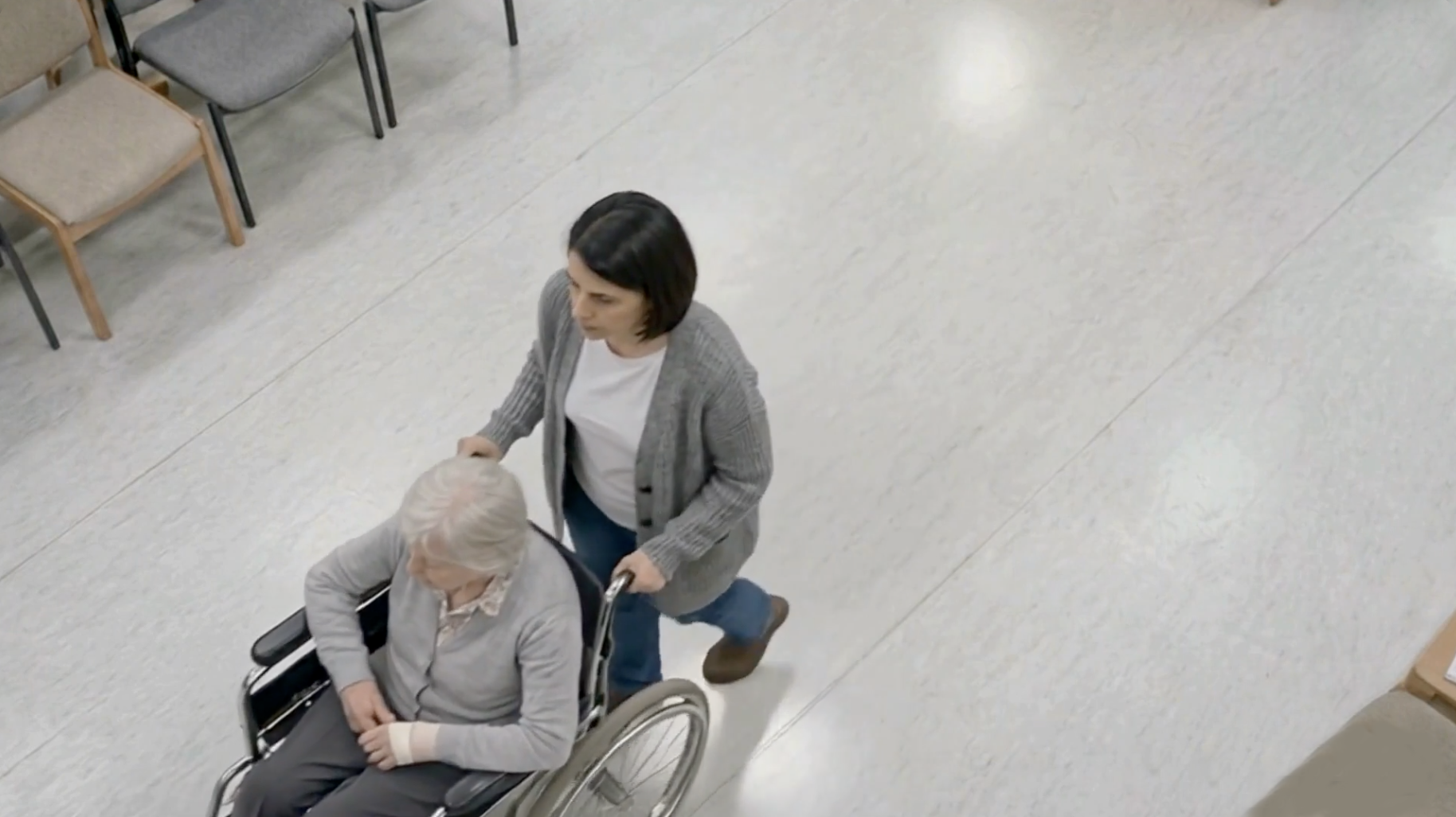
When I arrived, a wheelchair was already waiting by the door. I packed her things and a bag full of prescriptions, balanced everything on her lap, and wheeled her out. No one offered to help. As I passed the nurses' station I asked, "Is that it? Do we just walk out? Is there anything to sign?" They said no, good to go. So that was it. Out the door, into a car, home.
This is the part people don't say enough. I am not a carer. I love my mum, of course I'll do what needs to be done, but I also have my own family, my own work, my own body, my own limits. That first night was awful, not just because of the compressed discs, but her shoulder too. As long as we kept the painkillers on schedule, every four hours, it was manageable, barely. I remember thinking, is this really it? Is the system relying on us, adult children with no medical training, most of us juggling work and families and our own health, to become the default carers simply because there isn't another quick option?
I later found out she'd had a panic attack the night before, terrified they'd send her home.
Two weeks and two days later, it escalated again. Mum had a mini stroke. She called me straight away, and I knew instantly something was wrong, she said her face felt weird. I told her to press the buzzer, grabbed my keys, and drove there praying for green lights. The ambulance got there quickly that time. They ran tests and confirmed a TIA (Transient Ischemic Attack), often called a "mini-stroke". Apparently they're "not generally serious," but tell that to someone who's just had one, or to their daughter watching it happen.
Later that day, after scans and conversations, a doctor explained something else. Some of the pain medication prescribed by the private hospital can, in rare cases, trigger mini strokes. I remember thinking, wait, what? Are we meant to look up every medication before giving it to our parents? Why didn't anyone warn us? Why didn't the pharmacist flag it?
So many questions, so few answers.
This is why I'm talking about it. Because it's not just about my mum, it's about my generation. We are the default carers now, trying to keep our own lives moving while navigating hospitals, falls, medications, recovery, and bureaucracy, all at once. You think you're prepared. You're not. You sleep on their couch for a few nights, then you're making meals, sorting scripts, tracking medications, driving, lifting, watching, holding everything together. Suddenly you're not just a daughter. You're a carer, a cook, a driver, a nurse, and apparently a pharmacist too.
When I step back and look at it, the pattern is hard to ignore. My dad died unwitnessed in a private hospital, hours on the floor before anyone noticed. Now his 83-year-old widow falls at home, spends twelve hours on the floor, ends up in hospital with compressed discs, gets minimal rehab, gets sent home early and terrified, with a bag full of pills, and two weeks later has a mini stroke from those same pills. So I have to ask, is this care? Is this normal? Or is this happening everywhere, and no one's talking about it properly?
The gap between hospital and home, between independence and safety, between policy and real life, is enormous. And family is what fills that gap. Usually unpaid. Usually exhausted. Usually invisible.
If a parent is about to be discharged
I'm not a clinician or a pharmacist, just someone who learned these things the hard way and wishes someone had told me first.
Ask for the discharge plan in writing, including exactly what medications are being sent home, what each one is for, whether any of them are addictive, and what to watch for. And ask that it's actually explained to you, or another family member, not just handed to your elderly, stressed parent alone. Her discharge plan was handed straight to her, with no one else in the room, an 83-year-old who'd just been through a frightening week, not in any state to think to ask questions. I don't think that was anyone trying to cut corners, but it meant the only person being told what to watch for was the person least equipped, in that moment, to take it in.
Ask specifically about interactions and side effects, particularly with pain medication. We weren't told. We trusted what she was given and didn't think to question it. Pharmacists and discharge nurses can flag risks like dizziness, fainting, or stroke risk if asked directly, but it's rarely volunteered unprompted. A simple "is there anything in here that could cause a fall, to faint, become addicted to, or a stroke" is a fair question to ask before you leave the building.
If your parent says they're not ready, or seems anxious about going home, say so to staff directly, even if discharge is already in motion. It won't always change the outcome, but it puts the concern on record, and sometimes it does change the outcome.
Don't assume "discharged" means "recovered." It often just means the hospital's part is finished, not that the person is actually able to look after themselves yet. Ask plainly what support, if any, is expected to happen at home, and whether that's realistic for your family.
I'll be honest about something else too. I was in shock that they were sending her home early when she clearly wasn't ready, and by the time I'd processed that, the wheelchair was already at the door and there was no one left to ask anything to. I've carried a kind of guilt about that, that I didn't ask more, push harder, slow it down. I know, logically, that's ridiculous, you can't ask the questions you don't yet know you need to ask. But knowing it's ridiculous hasn't fully stopped me feeling it. If you're sitting with something similar, I don't think that guilt means you did anything wrong. I think it just means no one told you what to ask, and that's the actual gap, not you.
None of this fixes the gap between hospital and home. But knowing it exists, before you're standing in it exhausted at midnight with a medication schedule and no instructions, makes it a little less frightening.
I know my story isn't unique. And that's exactly why we're doing this.
– Belinda Scott, Founder of NAVO