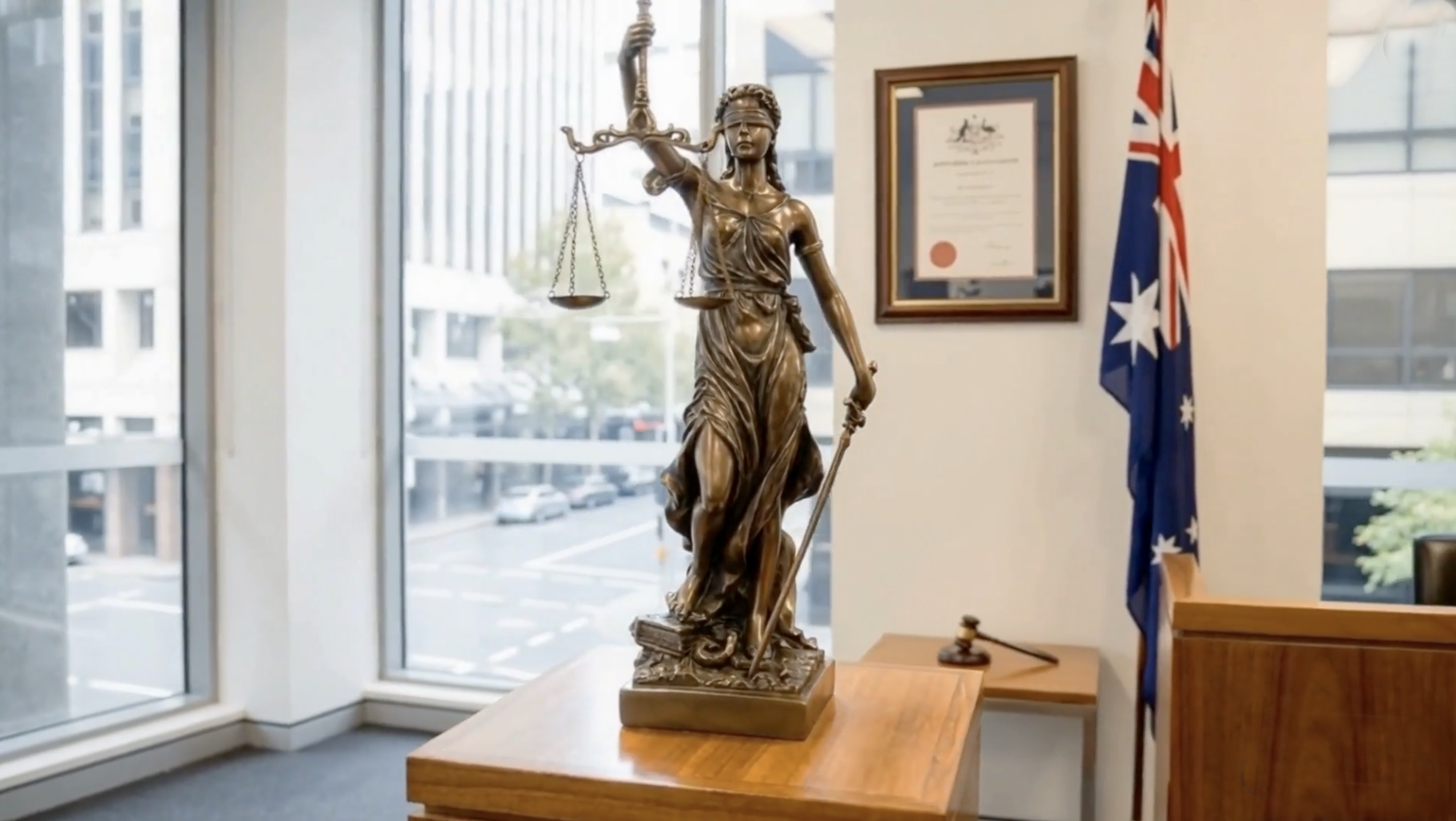
After I got nowhere with the hospital, I turned to the legal system, not for money, but to understand something much simpler. How can something feel so wrong, and still be allowed?
So I sat down with lawyers. They were kind, they listened, and they understood exactly what I was saying. Then they explained how it actually works.
In Queensland, to have a medical negligence case, you have to prove three separate things. First, breach of duty, that the care provided fell below a reasonable professional standard. Second, medical causation, that what happened directly caused the death, and that it could have been prevented. Third, damages, that I, as the claimant, suffered a recognised psychiatric injury, not grief, something diagnosable, something measurable.
If any one of those three is missing, there is no case. I failed all three, no matter how clear it felt that something had gone wrong.
This is where it really hit me. During one of those conversations, a lawyer said to me, "You're right. It's morally wrong. But that's not how the law works." In that moment, everything became very clear. The legal system doesn't ask whether something was right, it asks whether it can be proven within the rules. And those rules are built around liability, not humanity.
So even when something feels deeply wrong, if it sits within what's considered standard, it's protected. That word, standard, started to bother me more and more. Because what I'd seen firsthand wasn't safe, and it wasn't ethical. It was just standard.
I also learned something I hadn't known before. In Queensland, public and private hospitals don't operate under the same rules. Public hospitals are state-run, with mandated nurse-to-patient ratios. Private hospitals are federally regulated, and those ratios don't exist in the same way. Staffing in a private hospital is often based on budgets, not safety standards, which means a hospital can technically meet its obligations even while clearly under pressure. When something goes wrong in that environment, it isn't seen as a failure. It's seen as within range.
Going through each part of the test made that gap even clearer. On causation, my dad was 81 with motor neurone disease, and the reality is he would likely have fallen again regardless. That made it very difficult to prove the unwitnessed fall alone caused his death in the legal sense. On damages, I was devastated, but I had no financial dependence on him, hadn't taken time off work, and had no formal diagnosis. Legally, that was a no too.
And even if I had pursued it, I came to understand that an individual case like mine wouldn't have shifted the structure that allowed it to happen. Real change doesn't usually come from one family's case, it comes from enough people refusing to accept that "standard" is the same thing as "acceptable."
So I let go of the idea of justice through the courts. Not because I gave up, but because I understood the game, and where it could and couldn't take me.
If you're wondering whether you have a case
I'm not a lawyer, and nothing here is legal advice, this is genuinely just what I learned, specific to my situation in Queensland. Laws and tests differ by state and by country, so please don't take this as the test that applies to you.
What I'd say is this. A "no" from a lawyer about whether you have a legal case is not the same as a "no" about whether something was wrong. Those are two separate questions, and it's worth letting yourself hold both answers at once, rather than letting the legal answer overwrite what you know to be true.
If you do speak to a lawyer, ask them to walk you through each part of the test in your jurisdiction individually, rather than just giving you a final yes or no. Knowing which specific part falls over, and why, made it easier for me to actually accept the outcome, rather than being left with a vague sense that the system simply didn't care.
And if the answer is no, it's worth asking yourself what you actually wanted from pursuing it. For me, it was never really about the money, it was about accountability, and stopping it happening to someone else's family the way it happened to mine.
I remember talking this through with one of the lawyers, half-joking about going to the media, or pushing for reform at a government level. We both ended up laughing, in the way you laugh when something's true and sad at once, because we knew how that story actually goes. Years of effort, governments changing hands before anything moved, a battle I was never going to win in any timeframe that meant something.
That conversation is where something shifted for me. If the system wasn't going to change from the top, on any timeline I'd live to see, then the only real lever left was doing things differently ourselves, behind the scenes, family by family. That's genuinely where NAVO started, not as a business plan, but as the realisation that helping each other navigate this might be the only kind of change actually available to us.
I know my story isn't unique. And that's exactly why we're doing this.
– Belinda Scott, Founder of NAVO